
In the competitive landscape of industrial and building automation, a product that consistently delivers on its core promise while evolving with market demands is a rare find. The DHC15A programmable time switch has proven to be exactly that—a star performer whose sustained hot sales are a direct testament to its foundational principle: solving the most persistent customer pain points. While many products come and go with fleeting features, the DHC15A has cemented its position by mastering the fundamentals, chief among them being its industry-leading 3-year battery life. This single feature has liberated countless users from the costly and frustrating cycle of frequent battery replacements, ensuring uninterrupted operation and unparalleled reliability. Now, in a significant leap forward, the DHC15A has undergone a strategic upgrade, amplifying its utility by newly adding 32 groups of ON/OFF timing functions, thereby expanding its reach into more complex and demanding application scenarios than ever before.
The Bedrock of Reliability: Deconstructing the 3-Year Battery Life Advantage
The claim of a three-year battery life is not merely a marketing slogan; it is the engineering cornerstone upon which the DHC15A's reputation is built. In practical terms, this translates to over 1,000 days of maintenance-free operation. For facility managers, production line supervisors, and system integrators, this reliability is invaluable. Consider the hidden costs of traditional time switches: the labor hours spent identifying, scheduling, and performing battery replacements; the risk of system downtime during critical periods; and the inventory management of spare batteries. The DHC15A effectively eliminates these concerns.
This exceptional endurance is achieved through a sophisticated integration of hardware and software optimization. The device utilizes an ultra-low-power microprocessor that sips energy, coupled with highly efficient power management circuitry that minimizes quiescent current draw. Even during the physical actuation of its internal relay, the power consumption is meticulously regulated. This meticulous attention to power integrity ensures that the internal backup battery is reserved exclusively for maintaining the real-time clock (RTC) and program memory during main power outages, guaranteeing that all timing settings are preserved and the device resumes operation seamlessly once power is restored. This robust design makes it an ideal solution for remote or hard-to-access installation points, such as high-ceiling lighting control panels, distributed electrical cabinets in large facilities, or outdoor infrastructure.
Strategic Evolution: The Power of 32 Groups of Timing Functions
Building upon its solid foundation of reliability, the latest upgrade of the DHC15A addresses the growing complexity of modern automation. The addition of 32 independent groups of ON/OFF timing functions is a game-changer. While the previous 16 or 24 groups were sufficient for basic daily schedules, the new 32-group capacity opens the door to highly intricate control patterns that were previously impossible or required multiple, synchronized devices.
 |
|
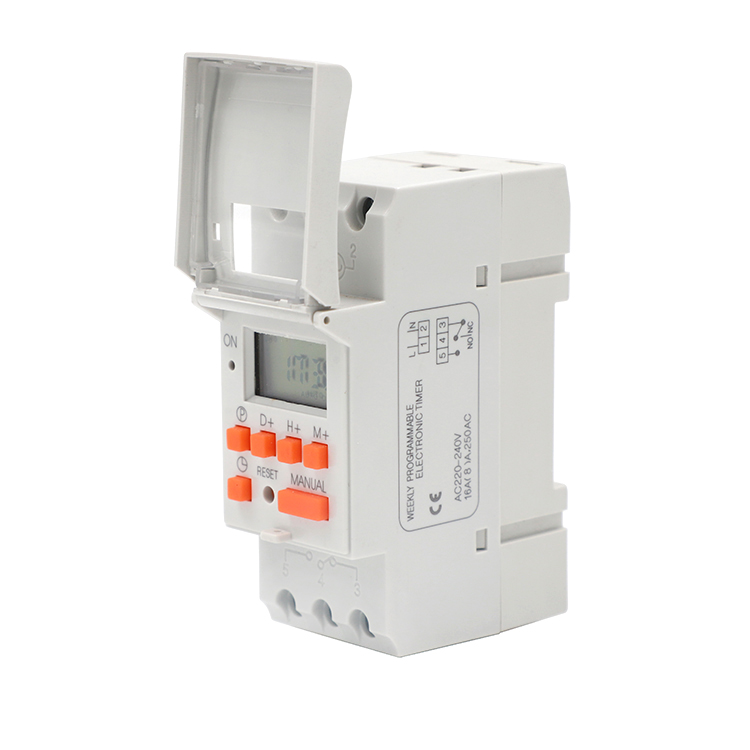 |
This enhanced programmability allows the DHC15A to adapt to scenarios requiring multi-process alternation and precise time-segmented start-stop commands. For instance:
· In Industrial Manufacturing: A single DHC15A can now manage an entire multi-stage production process. It can power up conveyor belts in sequence, activate different sets of machinery for specific durations, control cooling or exhaust fans during specific operational phases, and initiate automated cleaning cycles during breaks—all within a single, seamless daily program.
· In Smart Lighting and Building Management: The unit can now create sophisticated lighting schemes for commercial buildings. Beyond simple dawn-and-dusk control, it can manage interior lighting in zones, staggering start times for energy savings, controlling facade lighting with multiple dramatic sequences throughout the evening, and managing security lighting with randomized patterns to simulate occupancy.
· In Agricultural and Environmental Control: For greenhouse operations, the timer can now manage ventilation, irrigation, and supplemental lighting in highly granular time segments. Different zones can have unique schedules, mimicking natural conditions more accurately to optimize plant growth.
The programming remains user-friendly, typically allowing for settings based on a weekly calendar with exceptions for specific dates, ensuring that complex logic does not come at the expense of usability.
Uncompromised Performance in a Robust Package
Despite this significant functional upgrade, the DHC15A retains all the robust features that made it a market leader. It continues to support a wide AC voltage input range of 180~250V, making it stable and reliable even in areas with fluctuating grid power. Its timing accuracy remains exceptional at ≤2 seconds per day, ensuring that long-term schedules do not drift and processes remain synchronized.
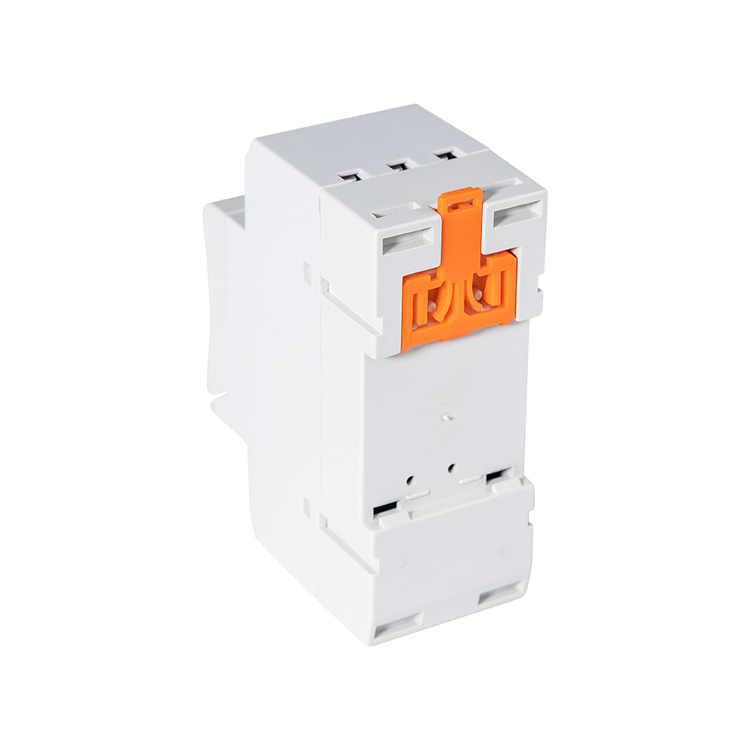
Installation is universally compatible thanks to the adoption of the DIN 35mm standard guide rail form factor. This allows for quick, tool-free installation alongside circuit breakers, contactors, and PLCs in any standard electrical cabinet, ensuring seamless integration into both new projects and retrofits without requiring modifications to existing layouts.
Furthermore, its strong load-handling capability ensures it can drive a wide array of equipment. With a resistive load capacity of 16A (suitable for heaters, incandescent lighting) and an inductive load capacity of 2.5A (for motors, solenoids, and fluorescent ballasts), it is a versatile component ready for real-world electrical demands.
Conclusion: A Future-Proof Solution for an Automated World
The DHC15A is a prime example of intelligent product evolution. It has not abandoned the feature that made it great but has instead built upon it, addressing the next tier of customer needs. By combining the undeniable, long-term value of a 3-year battery life with the newfound flexibility of 32 timing groups, it solidifies its position as an indispensable tool for engineers and designers. It is no longer just a time switch; it is a compact, reliable, and powerful automation controller, poised to deliver superior performance in the expanding fields of intelligent manufacturing, intelligent lighting, and modern building electrical systems. Its continued hot sales are not just a trend, but a reflection of its enduring and expanding value propositio
Discover DAQUAN’s CE/TUV-certified relays, timers, energy meters & WiFi smart switches for industrial automation. ISO9001 factory in Wenzhou, 30 km to airport, global OEM/ODM.
No. 172, Xinguang Avenue, Xinguang Industrial Zone, Liushi Town
Copyright © 2026 WENZHOU DAQUAN ELECTRIC CO.,LTD All rights reserved. Privacy Policy
 EN
EN
 Hot News