 EN
EN

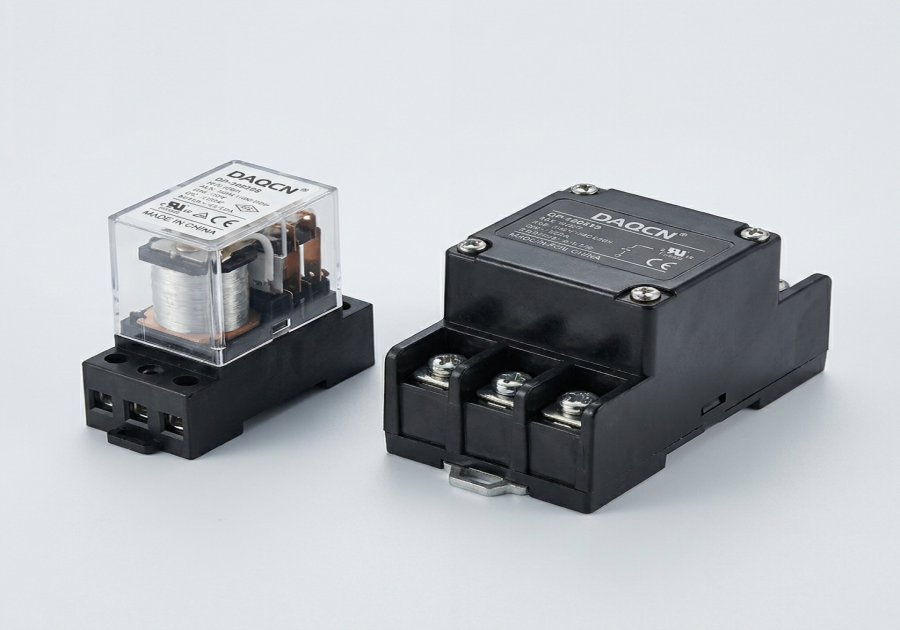
In the world of industrial automation and electrical control, the humble relay is a cornerstone component. However, for project managers and electrical wholesalers, selecting the right relay isn't just about matching voltage; it's a strategic decision that balances immediate procurement costs against long-term operational durability. This article provides a comparative analysis of general-purpose vs. specialized industrial relays, focusing on the critical factors of lifespan, contact ratings, and the total cost of ownership (TCO).
Understanding the General Purpose Relay
General-purpose relays, often referred to as 'ice cube' relays due to their clear plastic housings, are the workhorses of the electrical industry. They are designed for versatility and cost-effectiveness. In most light-duty applications—such as signal switching, control panel logic, or small motor starters—a general-purpose relay is perfectly adequate.
Key Characteristics:
- Standard Contact Ratings: Typically ranging from 5A to 10A.
- Cost-Effective: Low upfront price, making them ideal for high-volume, low-stress applications.
- Compact Design: Easy to mount on DIN rails or PCB boards.
- Wide Availability: Standardized footprints (like the 8-pin or 11-pin configurations) ensure they are easily sourced and replaced.
At DAQCN, models like the MY2 and LY2 series epitomize the high-quality general-purpose relay. They offer a reliable balance for users who need dependable switching without the extreme requirements of heavy industrial machinery.
The Case for Specialized Industrial Relays
While general-purpose relays excel in standard environments, specialized industrial relays are engineered for the 'extremes.' These are found in environments with high heat, high vibration, or where switching heavy inductive loads is a constant requirement. Specialized relays are often built with superior materials and advanced mechanical designs to ensure they don't fail when the stakes are high.
Key Characteristics:
- Enhanced Contact Ratings: Often reaching 20A, 30A, or higher, designed to handle the inrush current of large motors or solenoids.
- Advanced Contact Materials: Use of silver-tin-oxide (AgSnO2) or silver-nickel (AgNi) to prevent contact welding and oxidation.
- Extended Lifespan: While a standard relay might be rated for 100,000 electrical operations, specialized relays can often triple that number under the same load conditions.
- Environmental Protection: Features like hermetic sealing or specialized casings to resist dust, moisture, and corrosive gases.
Comparative Analysis: Lifespan and Contact Ratings
#### 1. Contact Ratings and Material Science
The most common failure point in a relay is the contact point. When a relay opens or closes under load, an arc is created. General-purpose relays use standard silver-alloy contacts which are sufficient for resistive loads. However, specialized relays utilize materials that can withstand the intense heat of persistent arcing from inductive loads. Choosing a relay with a contact rating that exceeds your maximum peak load is essential for ensuring durability.
#### 2. Mechanical vs. Electrical Life
A relay's life is measured in two ways: mechanical life (how many times the mechanism can cycle without load) and electrical life (how many times it can switch under a specific load). Specialized relays often have a mechanical life exceeding 10 million cycles. For a project manager, the electrical life is the more critical metric. A specialized relay might cost 2-3 times more than a general-purpose one, but if it lasts 5 times longer, the downtime savings alone justify the investment.
#### 3. Thermal Management
Industrial environments are rarely temperature-controlled. Specialized relays are designed with higher insulation classes (Class F or H) and materials that maintain their structural integrity at 85°C and above. In contrast, standard general-purpose relays may experience coil failure or housing deformation if subjected to prolonged high temperatures.
The Wholesaler's Perspective: Balancing the Inventory
For electrical wholesalers, the challenge is stocking a range that meets diverse client needs. Promoting general-purpose relays for standard building automation is smart for volume sales. However, positioning specialized relays as a 'premium, no-fail' solution for industrial clients builds trust and prevents the 'come-back' costs associated with premature part failure.
DAQCN: Engineering Reliability into Every Relay
At Wenzhou DAQUAN Electric (DAQCN), we understand that 'cost' is more than just the price on an invoice. Since 1996, we have refined our manufacturing processes to ensure that even our general-purpose relays meet rigorous international standards (CE, TUV, RoHS). For those requiring specialized performance, our R&D team focuses on:
- Contact Geometry: Optimizing the shape and surface area of contacts to reduce heat generation.
- Coil Efficiency: Reducing power consumption and heat output within the relay itself.
- Rigorous Testing: Each batch undergoes endurance testing to verify its rated lifespan.
Conclusion: Making the Strategic Choice
Balancing cost and durability is not about always choosing the cheapest or the most expensive option. It's about application-specific engineering. For light logic and standard control, the DAQCN MY series provides excellent value. For heavy-duty industrial cycles where downtime equals lost revenue, investing in a specialized relay with high-grade contact ratings is the only logical choice.
By understanding the material science and mechanical ratings behind these components, B2B buyers can ensure their electrical systems are built to last, optimizing both their budget and their reputation.