 EN
EN

Introduction: The Hidden Cost of Industrial Downtime
In the high-stakes world of industrial manufacturing, every second of downtime carries a significant price tag. For procurement managers, maintenance engineers, and facility directors, the selection of seemingly small components—like industrial relays—can be the deciding factor between a seamless production line and a multi-million-dollar bottleneck. When dealing with high-load machinery such as heavy-duty pumps, large-scale motors, or intensive industrial heating systems, the margin for error is razor-thin. A standard off-the-shelf relay simply won't suffice when the reliability of the entire system is on the line.
This guide explores the technical nuances of industrial relay selection, specifically focusing on the DAQCN MY2 and LY2 series. We will delve into why contact materials matter, how to match a relay to high-load demands, and how strategic procurement can transform a facility’s efficiency and return on investment (ROI).
1. Decoding the Basics: What Makes a "High-Load" Relay?
Industrial relays act as the "heart" of an electrical control system. Their primary function is to allow a low-power control signal to switch a high-power circuit. However, in "high-load" environments, the relay is subjected to extreme electrical and thermal stress that would quickly destroy consumer-grade components.
High-load machinery often involves inductive loads—such as motors, solenoids, and transformers—which generate significant back-EMF (electromotive force) and massive inrush currents during startup. For instance, a motor might draw six to ten times its rated current the moment it is energized. If the relay’s contacts are not designed to handle this surge, they can weld shut, pit, or overheat, leading to catastrophic failure. Selecting a relay with the appropriate switching capacity and arc-suppression capabilities is the first step in ensuring industrial longevity.
2. The Procurement Battle: MY2 vs. LY2 – Which is Right for Your Facility?
For many procurement professionals, the choice often boils down to two industry standards: the MY series and the LY series. At DAQCN Electric, we have refined both designs to meet the highest international standards, but understanding their distinct application profiles is vital for an optimized supply chain.
#### The MY2 Series: The Miniature Powerhouse
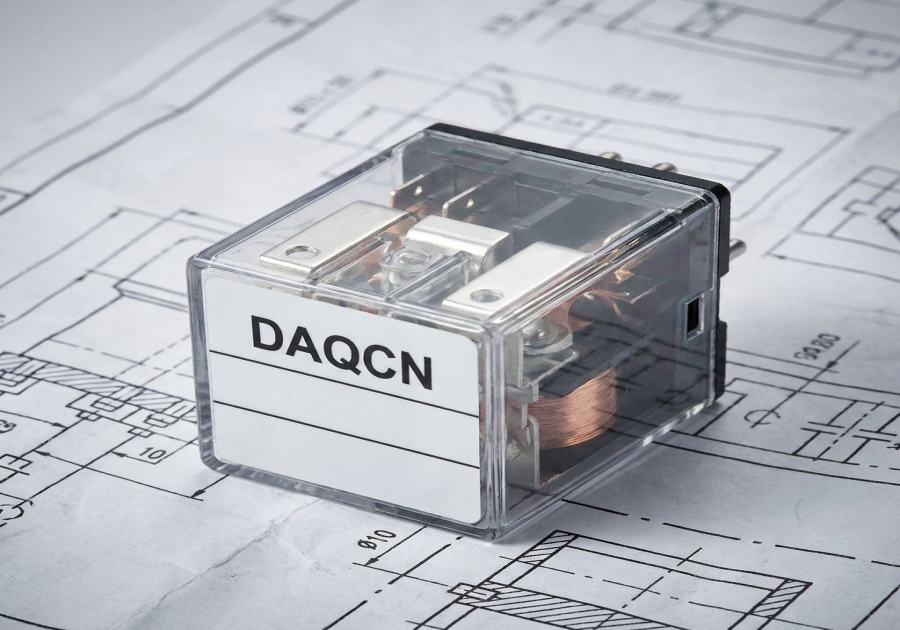
The DAQCN MY2 is a miniature general-purpose relay, renowned for its compact footprint and versatility. It is the ideal choice for control panels where space is at a premium but reliability cannot be compromised. With a typical switching capacity of 5A to 7A, the MY2 is perfect for logic switching, pilot duty, and controlling small actuators or sensors. Its clear casing allows for easy visual inspection, a feature highly valued by maintenance teams during routine checks.
#### The LY2 Series: The Heavy-Duty Workhorse
When the application involves true power switching, the LY2 series takes center stage. As the "big brother" to the MY2, the LY2 is engineered specifically for the rigors of high-load machinery. It features larger contact surfaces and a more robust internal structure, enabling it to handle switching currents of 10A to 15A with ease. The LY2 is the preferred choice for direct motor starting, high-wattage lighting banks, and industrial heaters. Its ability to dissipate heat more effectively under continuous load makes it the cornerstone of heavy-duty industrial control.
3. Technical Deep Dive: The Material Science of Reliability
The performance and lifespan of a relay are largely determined by the material of its contacts. When the contacts open and close under load, an electrical arc is formed. This arc generates intense localized heat that can erode the contact material over time.
#### The Superiority of Silver Alloys
At DAQCN, we utilize high-grade silver alloys (such as AgNi or AgSnO2) in our LY2 and MY2 series. Pure silver offers the highest electrical conductivity but is too soft to withstand the mechanical and thermal stresses of industrial switching. By alloying silver with Nickel (AgNi), we achieve a contact that is highly resistant to wear. For high-load machinery, Silver Tin Oxide (AgSnO2) is particularly valuable; its exceptional resistance to contact welding and arc erosion makes it the gold standard for handling high inrush currents.
#### Contact Resistance and Thermal Management
Lower contact resistance (typically less than 50mΩ in DAQCN models) ensures that minimal voltage is dropped across the contacts, reducing heat generation. In a high-load system, even a small increase in resistance can lead to a thermal runaway situation. Our precision manufacturing processes ensure consistent contact pressure and alignment, further enhancing the relay's ability to operate coolly under pressure.
4. Calculating the Procurement ROI: Quality vs. Cost
In B2B procurement, the "Total Cost of Ownership" (TCO) is a far more accurate metric than the initial unit price. A low-quality, generic relay might save a few cents on the front end but can cost a facility thousands of dollars in unscheduled downtime, lost production, and emergency labor costs.
#### The ROI of High-Quality DAQCN Relays
- Extended Life Cycles: With mechanical life cycles exceeding 10 million operations and electrical life cycles of 100,000+ under rated load, DAQCN relays significantly reduce the frequency of replacement cycles.
- Minimized Maintenance Labor: Reliability means your maintenance team spends less time on "firefighting" and more time on high-value preventative maintenance and system optimization.
- Global Compliance: DAQCN products are CE, RoHS, and TUV certified. For OEMs, this simplifies the path to international market entry, ensuring that the end-product meets global safety and environmental standards.
5. Key Selection Criteria for Procurement Managers
When evaluating relay suppliers for a high-load machinery project, use the following checklist to ensure a successful partnership:
- Rated Switching Current: Does the relay handle the peak inrush current, not just the steady-state operating current?
- Dielectric Strength: Does the relay provide sufficient isolation (typically 2,000 VAC or more) between the coil and the contacts to protect sensitive control electronics?
- Environment Compatibility: For harsh industrial environments, are sealed or dust-protected models available?
- Availability and Logistics: Does the supplier have the capacity to maintain consistent stock levels for your production needs?
Conclusion: The DAQCN Advantage in Industrial Control
Selecting the right industrial relay is more than a technical requirement; it is a strategic procurement decision that impacts the bottom line of the entire facility. By prioritizing technical specifications like silver alloy contacts and matching the relay series (MY2 vs. LY2) to the specific load requirements, procurement leaders can eliminate the most common cause of electrical failure in high-load machinery. At DAQCN Electric, we are committed to providing the technical excellence and robust hardware needed to move your facility from a state of downtime to a future of efficiency.