 EN
EN

Introduction: The Escalating Energy Challenge for Modern Factories
In the current global economic climate, energy is no longer a fixed overhead cost—it is a critical variable that can be managed, optimized, and reduced. For industrial facilities, where energy bills can account for 20% to 40% of total operating expenses, the search for efficiency is relentless. While multi-million-dollar upgrades to heavy machinery are one path toward sustainability, the most "hidden" and accessible Return on Investment (ROI) often lies in the precision control of existing equipment.
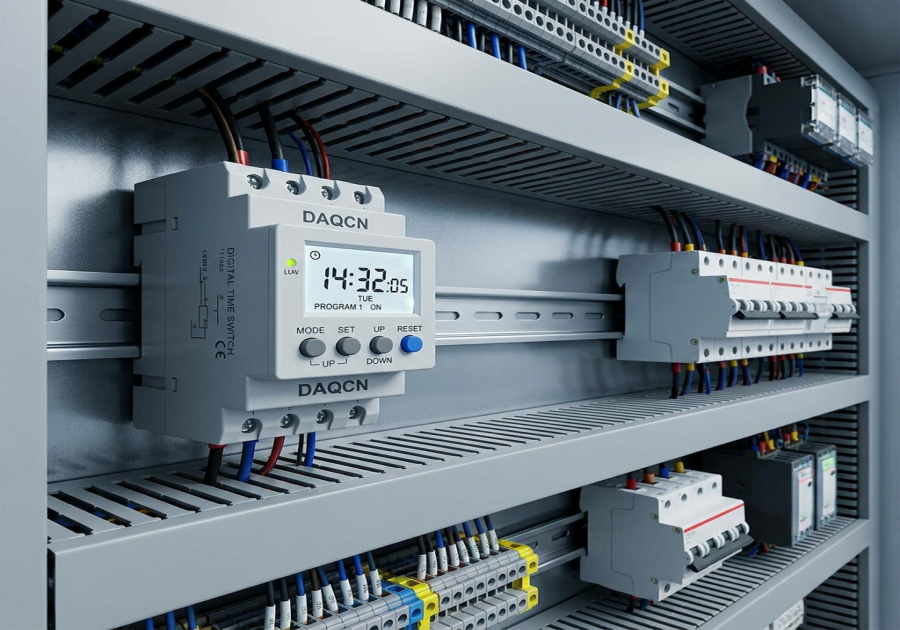
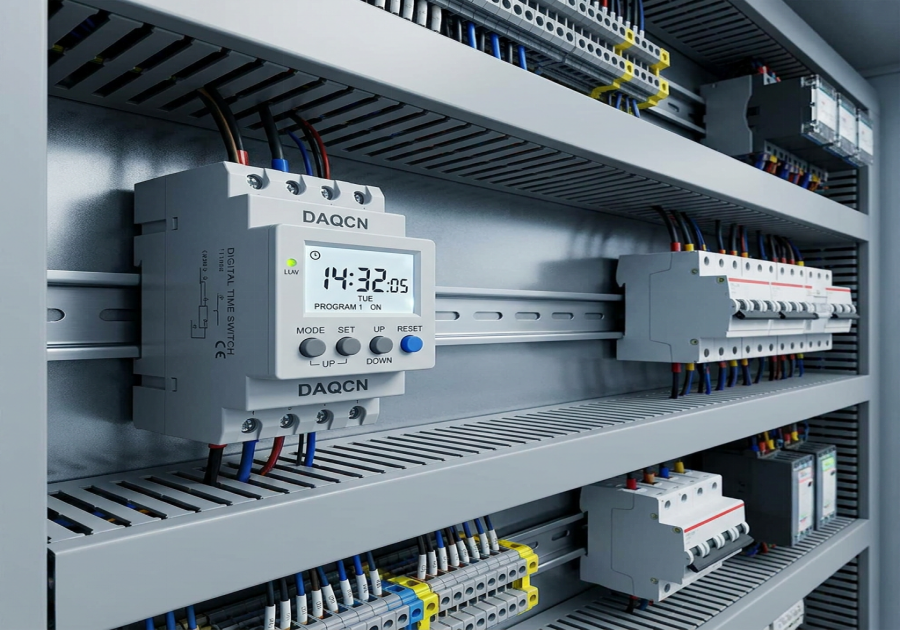
Enter the digital time switch. This compact, DIN-rail mounted device, often overlooked in the broader scope of industrial automation, is a powerhouse of energy conservation and operational efficiency. This article explores how B2B buyers—from distributors to OEMs—can leverage DAQCN digital time switches to drive measurable financial gains and operational precision.
1. Precision Control: Beyond Simple On/Off Operations
The era of manual switching and rudimentary mechanical timers is rapidly coming to an end. In a complex, 24/7 industrial environment, leaving a high-capacity ventilation system, a secondary water pump, or a massive lighting array running for just an extra hour a day can waste thousands of dollars annually. Digital time switches offer a level of precision that human intervention simply cannot match.
Unlike their mechanical predecessors, DAQCN’s digital switches provide:
- Micro-Second Accuracy: Quartz-controlled timing ensures that schedules remain perfectly synchronized with production shifts, even over months of continuous operation.
- Complex Programming: Modern switches allow for up to 16, 32, or even more ON/OFF programs per day or week, enabling highly granular control over equipment cycles.
- Pulse Functions: Ideal for signaling shift changes or triggering short-duration lubrication cycles without manual oversight.
- Holiday and Daylight Savings Modes: Automated adjustments for non-working days and seasonal time changes ensure that energy is never wasted on an empty factory floor.
2. Quantifying the ROI: Where the Savings Actually Come From
For procurement managers and engineers, justifying the cost of a system upgrade requires hard data. The ROI for a digital time switch is among the fastest in the industrial sector, often paying for itself within the first few months of installation.
#### A. Direct Energy Curtailment
In a typical industrial facility, lighting and HVAC systems are often left running during lunch breaks, between shift changes, or in unoccupied zones. By implementing digital time switches to enforce strict "unoccupied hours" protocols, facilities can achieve immediate energy savings of 15% to 30%. For a medium-sized plant, this translates into a direct reduction in utility bills that flows straight to the bottom line.
#### B. Asset Life Extension and Maintenance ROI
Mechanical wear and tear are directly proportional to run-time. A pump that runs 24/7 will require maintenance and eventual replacement twice as fast as one that only runs when needed. By using time switches to limit equipment operation to strictly necessary hours, facilities extend the Mean Time Between Failures (MTBF). This delays expensive Capital Expenditure (CAPEX) for new machinery and reduces the frequency of maintenance cycles.
#### C. Labor Efficiency and Error Reduction
Automating the startup and shutdown sequences of a production line eliminates the need for manual walk-throughs by maintenance staff. This frees up skilled technicians to focus on high-value preventive maintenance tasks. Furthermore, automation removes the risk of human error—forgetting to turn off a 50kW heater over a weekend can be a costly mistake that a digital switch prevents entirely.
3. Strategic Applications in Industrial Environments
Digital time switches are versatile tools that can be integrated into nearly any industrial subsystem:
- Industrial Ovens and Pre-heating: Program machinery to begin pre-heating 30 minutes before the morning shift arrives. This ensures that production starts exactly on time without the need to keep heaters running overnight.
- Compressor and Pump Sequencing: Avoid peak-demand charges from utility companies by scheduling high-draw equipment to run during off-peak hours or in staggered intervals.
- Water Treatment and Filtration: Automate the cleaning and filtration cycles of industrial water systems to ensure compliance with environmental standards while minimizing pump run-time.
- Exterior and Security Lighting: Use astronomical (Astro) functions that track the sun's position to adjust lighting schedules automatically, ensuring safety and visibility without wasting daylight energy.
4. Technical Selection Criteria for B2B Buyers
When sourcing digital time switches for a professional environment, engineers and procurement specialists must look beyond the user interface. The "industrial-grade" label must be backed by technical specifications:
- Switching Capacity: The internal relay must be rated to handle the inductive loads of industrial motors. DAQCN offers models with switching capacities ranging from 16A to 30A to suit various applications.
- Battery Backup: A long-life lithium battery (typically 3 to 5 years) is essential to preserve the internal clock and programmed data during power outages, preventing the need for costly re-programming.
- DIN Rail Mounting: For ease of integration into standard industrial control cabinets, DIN rail compatibility is non-negotiable.
- EMI/RFI Resistance: In an environment filled with variable frequency drives (VFDs) and heavy motors, the time switch must be shielded against electromagnetic interference to prevent timing drift or false triggers.
5. The DAQCN Difference: Reliability in Every Cycle
At DAQCN Electric, we specialize in timing solutions that bridge the gap between simple automation and advanced energy management. Our digital time switches are engineered with high-durability components that have been tested in the world's most demanding industrial zones. For distributors and OEMs, partnering with DAQCN means providing your clients with a product that reduces "callback" service costs and enhances the overall energy profile of their operations.
Conclusion: Future-Proofing with Precision
Energy optimization does not always require a total facility overhaul or the installation of complex Building Management Systems (BMS). Often, the most significant gains start with the precision control of the assets you already own. Digital time switches offer a low-cost, high-impact solution that delivers measurable ROI through energy savings, asset protection, and operational automation. As industrial facilities face increasing pressure to reduce their carbon footprint and increase profitability, the precision of DAQCN timing solutions will be a key driver of success in the greener industrial future.