 EN
EN

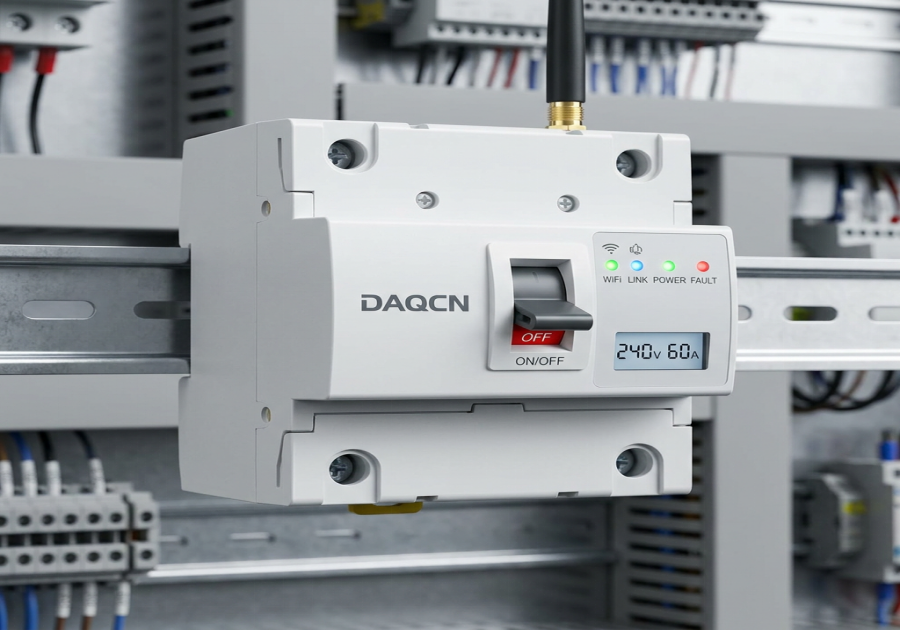
Scaling IoT for Industry: Why WiFi-Enabled Smart Circuit Breakers are the Future of Factory Control
In the rapidly evolving landscape of Industrial IoT (IIoT), the traditional electrical panel is undergoing a profound transformation. As factories move toward 'Industry 4.0' standards, the demand for granular control, real-time data, and remote accessibility has never been higher. At the heart of this revolution is the WiFi-enabled smart circuit breaker—a device that does far more than just protect circuits. For B2B buyers, IoT solution providers, and industrial procurement officers, understanding why these devices are the future of factory control is essential for remaining competitive.
#### The Evolution of Industrial Power Distribution
For decades, circuit breakers were 'dumb' devices—mechanical switches designed to trip when a fault occurred. While reliable, they offered no insight into why they tripped or how much power was being consumed before the failure. In a modern factory environment, 'no news' is not necessarily 'good news.' Hidden inefficiencies and minor electrical leaks can lead to massive overhead costs and unexpected downtime.
WiFi-enabled smart circuit breakers, such as those manufactured by DAQCN Electric, bridge the gap between traditional electrical engineering and modern data science. By integrating communication modules directly into the breaker housing, these devices turn every circuit into a data point on a global network.
#### The Strategic Importance of Tuya Compatibility
One of the most critical factors for B2B buyers today is ecosystem compatibility. A smart device that exists in a silo is a liability. This is why DAQCN’s focus on Tuya compatibility is a game-changer for industrial scaling. Tuya Smart is one of the world’s leading IoT platforms, providing a robust, secure, and highly scalable cloud infrastructure.
By choosing WiFi smart breakers that are Tuya-compatible, factory managers can:
1. Centralize Control: Manage thousands of devices across multiple sites through a single dashboard or customized app.
2. Enable Interoperability: Link circuit breakers with other IoT sensors (temperature, humidity, vibration) to create complex automation logic. For example, a breaker could automatically shut down a specific machine if an external sensor detects an overheating bearing.
3. Ensure Security: Leverage Tuya’s military-grade encryption and global data compliance standards, mitigating the cybersecurity risks often associated with 'home-grown' IoT solutions.
#### Real-Time Energy Analytics: The End of Hidden Costs
For industrial procurement, the bottom line is energy efficiency. WiFi smart circuit breakers provide real-time monitoring of voltage, current, and power consumption. In a factory with hundreds of machines, this level of detail allows for 'Energy Fingerprinting.'
By analyzing energy patterns, managers can identify machines that are performing sub-optimally. A sudden spike in power draw might indicate a mechanical failure in its early stages, allowing for predictive maintenance before a catastrophic breakdown occurs. DAQCN’s smart breakers provide historical data logging, enabling B2B buyers to generate precise energy audits and implement load-shedding strategies during peak demand periods to save on utility costs.
#### Enhanced Safety: Remote Control and Leakage Protection
Safety remains the paramount concern in any industrial setting. Traditional leakage protection requires manual testing and physical proximity to the panel. WiFi smart circuit breakers change this dynamic through:
- Remote Tripping and Resetting: Authorized personnel can isolate dangerous circuits remotely if an emergency is reported, without needing to enter a hazardous area.
- Smart Leakage Monitoring: Advanced models from DAQCN include highly sensitive leakage protection sensors that can send push notifications to a mobile device the moment an insulation fault is detected. This early warning system prevents electrical fires and protects workers from shock hazards.
- Adjustable Parameters: Unlike fixed mechanical breakers, smart breakers allow for the adjustment of over-voltage and under-voltage thresholds via software, catering to the specific needs of sensitive industrial equipment.
#### Scaling IoT: From Pilot Projects to Global Infrastructure
One of the biggest hurdles in industrial IoT is scalability. Deploying ten devices is easy; deploying ten thousand is difficult. WiFi-enabled breakers simplify this through 'Plug and Play' installation on standard DIN rails and rapid pairing protocols.
For OEM and ODM partners, DAQCN offers the ability to customize these smart devices to fit specific regional standards or technical requirements. Whether it is a 1P, 2P, 3P, or 4P configuration, the integration of WiFi connectivity ensures that the hardware can be updated with new features via Over-the-Air (OTA) firmware updates, future-proofing the investment.
#### Why DAQCN is the Partner of Choice for B2B Procurement
With nearly 30 years of experience in the electrical industry, DAQCN (Wenzhou DAQUAN Electric Co., Ltd) combines the reliability of traditional manufacturing with the innovation of modern IoT. Our ISO9001-certified factory produces CE, ROHS, and TUV-certified products that meet the rigorous demands of the global market.
As a factory-direct manufacturer, we offer:
- Rapid Production Cycles: Essential for large-scale industrial rollouts.
- Technical Customization: Adjusting delay specs, leakage sensitivity, and communication protocols to meet your specific project needs.
- Global Logistics: Strategically located in Wenzhou, near major ports and airports, ensuring your supply chain remains uninterrupted.
#### Conclusion
The future of factory control is not just about power; it is about intelligence. WiFi-enabled smart circuit breakers are the sensory organs of the modern industrial nervous system. By providing Tuya-compatible, data-rich, and safety-focused solutions, DAQCN is helping B2B buyers transition from reactive maintenance to proactive, intelligent energy management. In the race toward a more efficient and automated future, the question is no longer whether to adopt smart breakers, but how quickly you can scale them.