 EN
EN

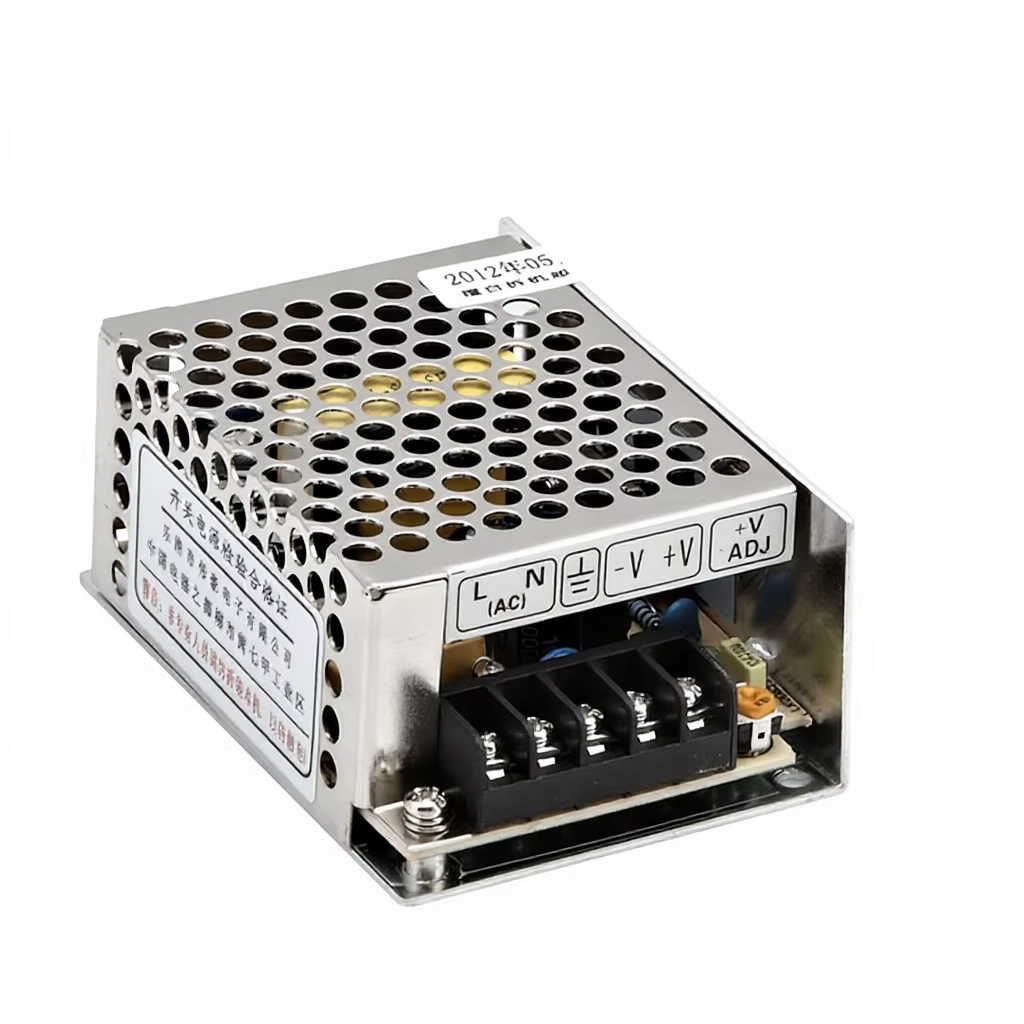
A switching power supply is a fundamental electronic component that converts electrical power from one form to another with exceptional efficiency and precision. Unlike older linear power supplies that dissipate excess energy as heat, a switching power supply uses high-frequency switching circuits to regulate voltage output and maintain stable power delivery across a wide range of input conditions. Understanding how a switching power supply operates is essential for anyone working with modern electronics, industrial control systems, telecommunications equipment, or renewable energy installations.
The core principle behind a switching power supply is elegantly simple yet powerful: rapidly switch the power on and off at frequencies typically ranging from 50 kHz to several megahertz. This high-speed switching allows a switching power supply to regulate output voltage efficiently while minimizing wasted energy. The switching mechanism works in concert with feedback control circuits that constantly monitor output voltage and adjust the duty cycle of the switching transistors to maintain precise voltage regulation under varying load conditions.
Core Architecture and Operating Principles
How Switching Power Supply Rectification and Conversion Works
The basic structure of a switching power supply begins with an input stage where alternating current (AC) is rectified into direct current (DC). This unregulated DC voltage is then fed into the switching stage, where a high-frequency transistor rapidly switches the power on and off. The duty cycle—the ratio of on-time to total cycle time—determines how much average power reaches the load. By modulating this duty cycle using feedback signals, a switching power supply can maintain constant output voltage regardless of input voltage fluctuations or output current demand.
The switching frequency in a modern switching power supply typically ranges from 50 kHz to several megahertz, far higher than the 50 or 60 Hz line frequency. This high-frequency operation enables the use of much smaller transformers, inductors, and capacitors compared to linear designs. A switching power supply using this principle generates significantly less heat and occupies considerably less space, making it ideal for compact electronic devices and space-constrained industrial applications.
Feedback Control and Regulation in a Switching Power Supply
Every switching power supply incorporates a feedback control circuit that continuously samples the output voltage and compares it to a reference voltage. When output voltage drifts above or below the target, the control circuit adjusts the duty cycle of the switching transistor to correct the deviation. This closed-loop regulation mechanism ensures that a switching power supply delivers stable voltage output even when the input voltage varies dramatically or when the load current changes suddenly. The control IC—typically a dedicated pulse-width modulation (PWM) controller—executes this regulation at the switching frequency speed, providing near-instantaneous corrections.
The response speed and accuracy of a switching power supply's feedback system directly impact its ability to handle transient loads. Industrial equipment, computer motherboards, and communication systems often experience sudden changes in power demand. A well-designed switching power supply can respond to these transients in microseconds, maintaining voltage within tight tolerance bands and preventing system failures or data corruption.
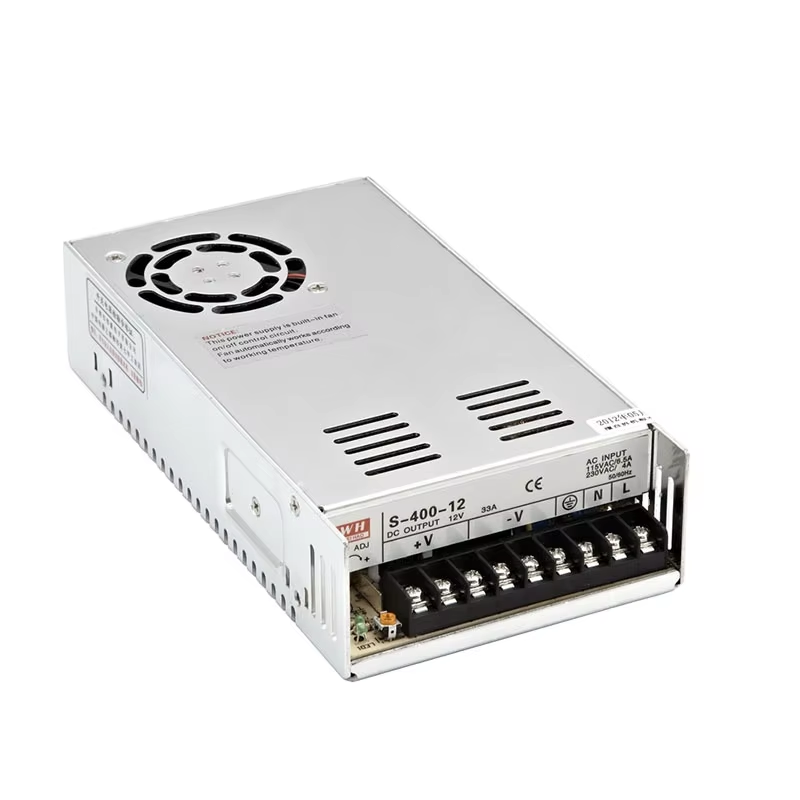
Power Conversion Stages and Energy Efficiency
Transformer Isolation and Step-Down Conversion in a Switching Power Supply
Many industrial and safety-critical applications require a switching power supply with transformer isolation to prevent ground loops and protect against electrical faults. In these designs, the high-frequency switching output is fed through a ferrite transformer that steps the voltage to the desired level while providing galvanic isolation. Because a switching power supply operates at high frequency rather than line frequency, the transformer can be dramatically smaller and lighter than an equivalent isolated linear power supply. The secondary winding of the transformer is then rectified and filtered to produce the final regulated DC output.
The use of ferrite core transformers in a switching power supply is critical because ferrite materials handle high-frequency operation efficiently with minimal core losses. This choice enables a switching power supply to achieve conversion efficiencies of 85 percent to 95 percent, compared to 40 to 60 percent for linear supplies. Such efficiency differences translate directly into reduced cooling requirements, smaller power distribution systems, and lower operating costs in industrial environments.
Output Filtering and Voltage Regulation Quality
After rectification, the output stage of a switching power supply includes filtering circuits comprising capacitors and inductors that smooth the rectified voltage and attenuate high-frequency ripple. A well-designed switching power supply minimizes output voltage ripple to just a few millivolts, well within the tolerance of sensitive electronic components. The filtering stage also prevents the switching noise generated by the switching power supply from radiating back into the input lines or affecting external equipment through conducted emissions.
Output voltage regulation in a switching power supply is specified as a percentage of nominal voltage and typically ranges from ±1 percent to ±5 percent depending on design and load conditions. This tight regulation is essential for precision instruments, telecommunications equipment, and microprocessor-based systems where voltage stability directly impacts performance and reliability. A switching power supply designed for industrial use must maintain this regulation across the entire specified input voltage range and load current range.
Practical Applications and Industrial Advantages
Why a Switching Power Supply is Standard in Modern Industrial Systems
Industrial control systems, distributed renewable energy installations, and telecommunications infrastructure depend on switching power supply designs for their superior efficiency and reliability. A switching power supply can operate from widely varying input sources—whether AC line voltage varying by 10 percent, DC sources with ripple, or battery systems—and still deliver stable regulated output. This flexibility makes a switching power supply invaluable in applications ranging from factory automation to backup power systems.
The compact size and light weight of a switching power supply compared to equivalent linear designs significantly reduce installation costs and physical footprint in equipment cabinets. Data centers, telecommunications hubs, and industrial control rooms contain hundreds or thousands of power supplies stacked in limited space. A switching power supply delivers the power density and thermal efficiency required for such dense installations. The high switching frequency also allows a switching power supply to operate quietly without the audible hum characteristic of 50 or 60 Hz linear transformers.
Protection and Reliability Features in a Switching Power Supply
Modern industrial-grade switching power supply designs incorporate multiple protective circuits including overcurrent limiting, overvoltage clamping, over-temperature shutdown, and input surge suppression. These protections ensure that a switching power supply and the equipment it powers remain safe even during abnormal operating conditions such as load short circuits, lightning strikes, or utility power surges. Some advanced switching power supply models include soft-start circuits that limit inrush current during power-on, reducing stress on upstream power distribution equipment and extending the life of electrolytic capacitors.
The long mean time between failures (MTBF) of a switching power supply, typically 100,000 to 200,000 hours or more, reflects the robustness of modern switching power supply design when combined with quality component selection. Thermal management is critical; a switching power supply that runs cooler than a linear equivalent experiences lower component stress and delivers greater reliability in demanding industrial environments.
FAQ
What is the main difference between a switching power supply and a linear power supply?
A switching power supply converts power by rapidly switching a transistor on and off at high frequency, achieving conversion efficiencies of 85 to 95 percent with minimal heat generation. A linear power supply, by contrast, uses a series-pass transistor that dissipates excess voltage as heat, resulting in efficiencies of only 40 to 60 percent and substantial heat output. The switching power supply also uses a much smaller transformer and fewer large filter capacitors, making it more compact and cost-effective for high-volume production.
Can a switching power supply handle variations in input voltage?
Yes, a switching power supply is specifically designed to operate reliably across a wide input voltage range, typically 85 to 264 volts AC or equivalent DC range. The feedback control circuit of a switching power supply continuously adjusts the switching duty cycle to maintain constant output voltage despite input variations. This flexibility makes a switching power supply ideal for global applications where utility voltage standards differ, for systems with aging or unstable power infrastructure, and for equipment that must tolerate brownout conditions.
Why does a switching power supply generate electrical noise?
The rapid on-off switching of transistors in a switching power supply creates high-frequency electrical noise that can interfere with sensitive analog circuits if not properly filtered and shielded. A well-designed switching power supply includes input and output filtering networks, shielded transformer designs, and careful PCB layout to minimize this noise. Industrial-grade switching power supply models often feature ferrite input filters and output LC filters to attenuate conducted and radiated emissions well below regulatory limits.