
Q: What is the impact of duty cycles on the lifespan of EMR vs. SSR in rapid switching environments?
Answer:
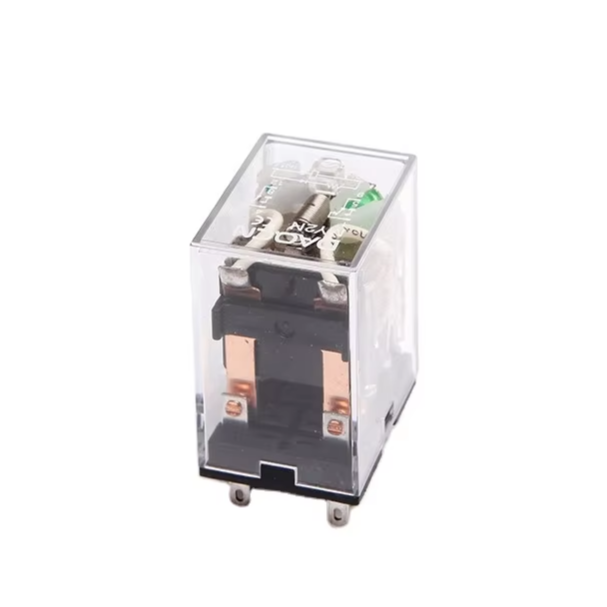
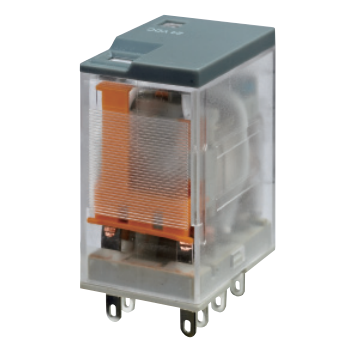
In industrial automation and cabinet design, relays are fundamental components used to switch electrical loads on and off. When designing systems with high-frequency switching operations (such as PID temperature control loops in plastic extruders or ovens), engineers must choose between two distinct switching technologies: Electromagnetic Relays (EMR) and Solid-State Relays (SSR). The primary operating variable that determines the success and lifespan of these relays is the duty cycle combined with the switching frequency. While both devices serve the same basic purpose of controlling high-power loads with low-power signals, their internal structures are completely different. These physical differences mean that high-frequency duty cycles affect their operational lifespans in vastly different ways. This B2B comparison guide analyzes the physics of switching, the failure mechanisms of EMRs and SSRs, and provides recommendations for specifying the right technology for your application.
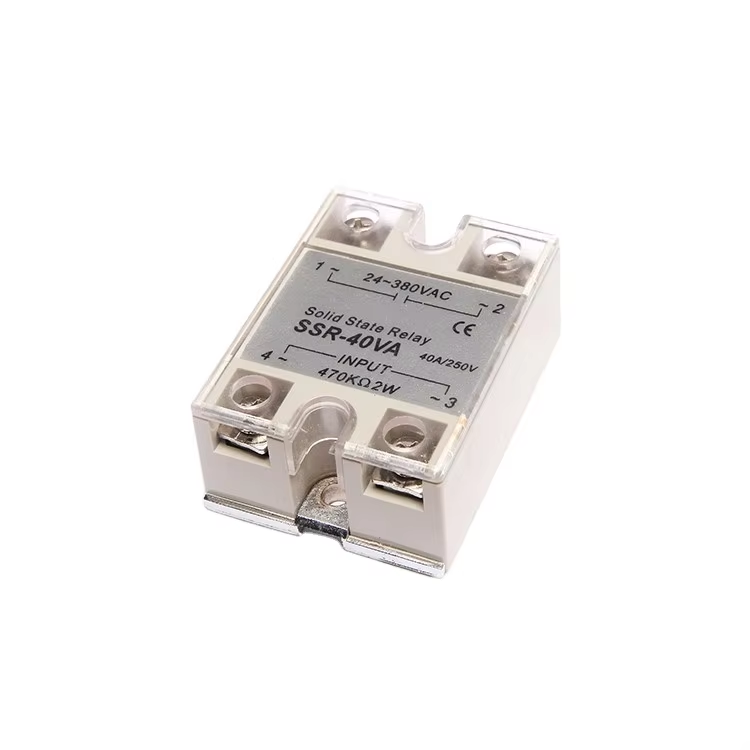
Understanding the Basics: How EMRs and SSRs Operate
To understand why duty cycles affect these devices differently, we must look at how they are constructed:
Defining Duty Cycle and Switching Frequency
In industrial control systems, duty cycle represents the ratio of the active ON time to the total cycle time. For example, if a heating element needs to run at 50 percent power, the controller might cycle the heater ON for 5 seconds and OFF for 5 seconds (a 10-second total cycle time, representing a 50 percent duty cycle). This means the relay is switching ON and OFF six times every minute.
If the system demands higher precision, the controller might reduce the cycle time to 2 seconds, switching ON for 1 second and OFF for 1 second (still a 50 percent duty cycle, but now the switching frequency increases to 30 times per minute). This high-frequency rapid switching is what degrades electromechanical and semiconductor switches differently.
The Impact of Rapid Switching on EMR Lifespan
Electromechanical relays are highly susceptible to wear when subjected to rapid switching frequencies, regardless of the duty cycle percentage. Their lifespan is determined by two main factors:
1. Mechanical Wear and Fatigue: Every cycle of an EMR involves physical movement. The return spring undergoes mechanical stress, and the armature impacts the metal stop. Over millions of cycles, the return spring loses its tension or breaks. A standard EMR is rated for approximately 10 million mechanical operations under zero load.
2. Electrical Arc Erosion: The primary failure mechanism of EMR contacts under load is electrical arcing. When the contacts open or close, a small arc is struck across the narrow air gap. This high-temperature arc melts a tiny amount of the contact material. Over time, this leads to material transfer, high contact resistance, and eventually contact welding. Under rapid switching, the contact surface does not have sufficient time to cool between cycles, accelerating the rate of erosion and micro-welding. Under standard electrical loads, an EMR's lifespan drops from 10 million cycles to 100,000 or 500,000 operations.
If an EMR switches once every 10 seconds, it will accumulate approximately 3.1 million cycles in a single year of 24/7 operation, meaning it will likely fail within a few months. Therefore, EMRs are highly unsuitable for rapid, high-frequency switching environments.
The Impact of Rapid Switching on SSR Lifespan
Because Solid-State Relays have no moving parts or mechanical contacts, they do not suffer from mechanical wear or electrical arcing. Under rapid switching environments, an SSR's electrical life is theoretically infinite. However, SSR lifespans are heavily impacted by thermal stress and thermal cycling.
1. Junction Temperature and Heat Generation: When a semiconductor switch is active, it exhibits a small internal voltage drop across its terminals (typically 1.0 to 1.6 Volts). This voltage drop multiplied by the load current generates significant internal heat (approximately 1 to 1.5 Watts per Ampere of load current). For example, a 30A load on an SSR generates 30 to 45 Watts of heat inside the small semiconductor die.
2. Thermal Fatigue from Thermal Cycling: In a rapid switching environment, the internal semiconductor junction heats up during the ON cycle and cools down during the OFF cycle. This rapid, repetitive temperature fluctuation causes thermal cycling stress. Over millions of rapid thermal cycles, the repetitive expansion and contraction can fracture the solder joints, delaminate the semiconductor die from the substrate, and cause device failure.
3. Thermal Management: To achieve their multi-year lifespan potential in rapid switching environments, SSRs must be mounted on properly sized aluminum heatsinks with thermal interface material applied to the backplate. The heatsink must dissipate the generated heat effectively to keep the semiconductor junction temperature well below its maximum limit.
DAQCN Switching Solutions
DAQCN is a premier manufacturer of high-quality industrial electromechanical relays and solid-state relays. Our EMRs are designed with heavy-duty silver tin oxide contacts for maximum arc resistance in general-purpose low-frequency applications. For demanding rapid-switching environments, we offer a robust line of DIN rail and panel-mounted SSRs featuring advanced SCR outputs, integrated over-temperature protection, and custom-designed aluminum heatsinks.
Conclusion
Choosing between an electromechanical relay and a solid-state relay in rapid switching environments is a decision driven by the physics of wear. For low-frequency applications (such as safety shutdowns that cycle a few times a day), EMRs are highly cost-effective and provide excellent physical isolation. However, for high-frequency rapid switching loops (such as PID heating controls), the mechanical contacts and arcing of EMRs will lead to premature failure within weeks or months. In these environments, SSRs are the standard choice, offering infinite switching cycles provided they are equipped with adequate thermal management. Invest in the right switching technology today with DAQCN. Contact our engineering support team to analyze your system's duty cycles and select the ideal EMR or SSR components for your project.
Discover DAQUAN’s CE/TUV-certified relays, timers, energy meters & WiFi smart switches for industrial automation. ISO9001 factory in Wenzhou, 30 km to airport, global OEM/ODM.
No. 172, Xinguang Avenue, Xinguang Industrial Zone, Liushi Town
Copyright © 2026 WENZHOU DAQUAN ELECTRIC CO.,LTD All rights reserved. Privacy Policy
 EN
EN
 Hot News