
Q: Mechanical vs Digital DIN-Rail Time Switches: Which One Should You Choose?
A:
1. Two Ways to Switch on a Schedule
DIN-rail time switches look similar from the front: a dial or a keypad and a switched output rated for lighting and small motor loads. The difference is inside. A mechanical switch keeps time with a spring or a synchronous motor and marks its switching points with tabs on a rotating 24-hour dial. A digital switch keeps time with a quartz clock and electronic memory and is programmed through buttons and a display. DAQUAN builds both families: the 24-hour mechanical SUL181D and SUL181H, the DIN-rail SUL180A, and digital weekly timers such as the DHC15A and TM-619LHN. Choosing between them is an engineering decision about how the load behaves.
The practical questions are short. Does the schedule change often? Must it survive a power cut with the correct time? Can someone program a keypad, or is a dial with tabs more robust here? The answers point to one family faster than any spec sheet.
2. The 24-Hour Mechanical Switch: Where It Still Wins
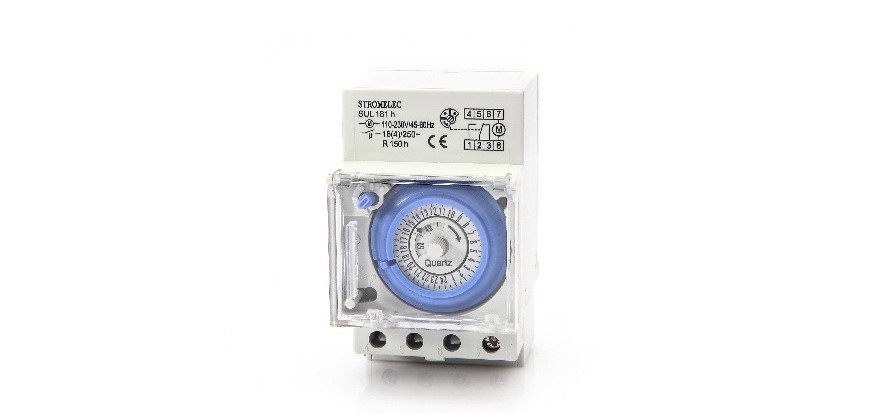
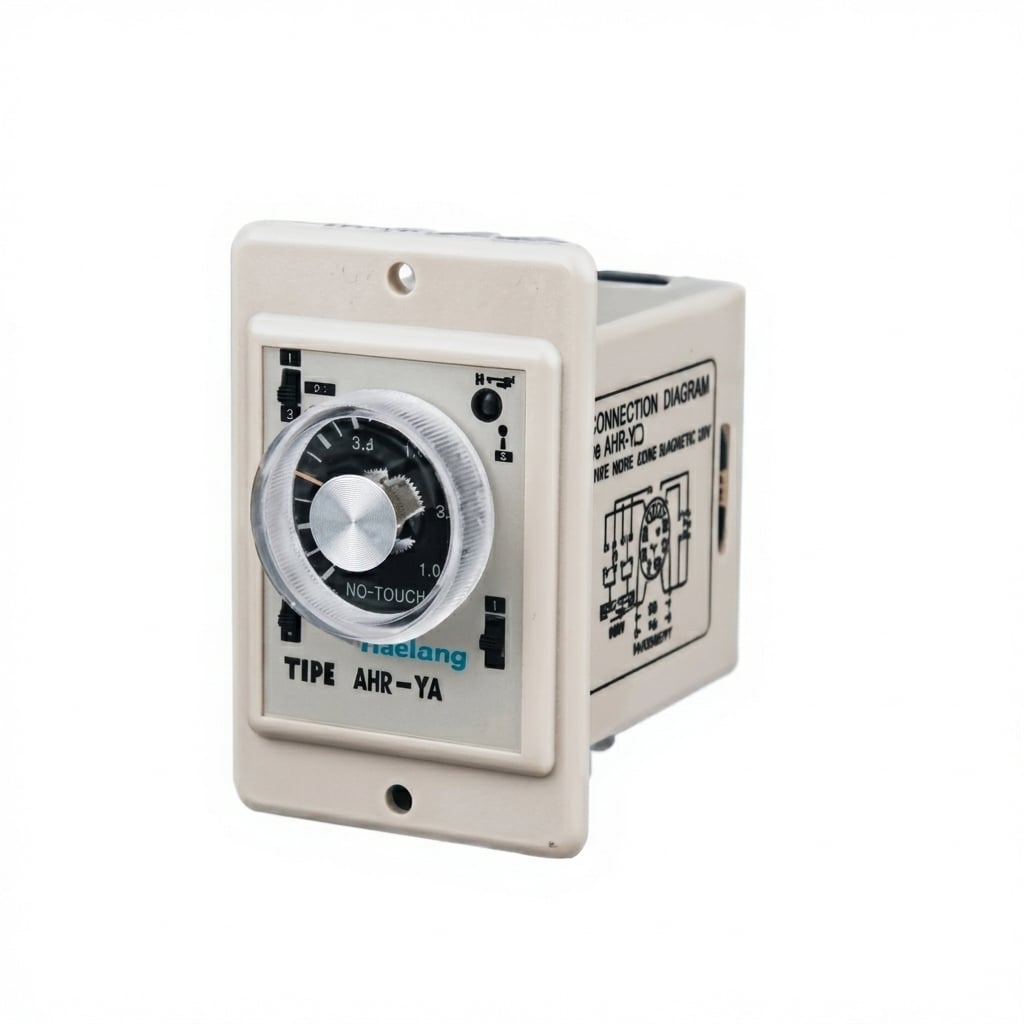
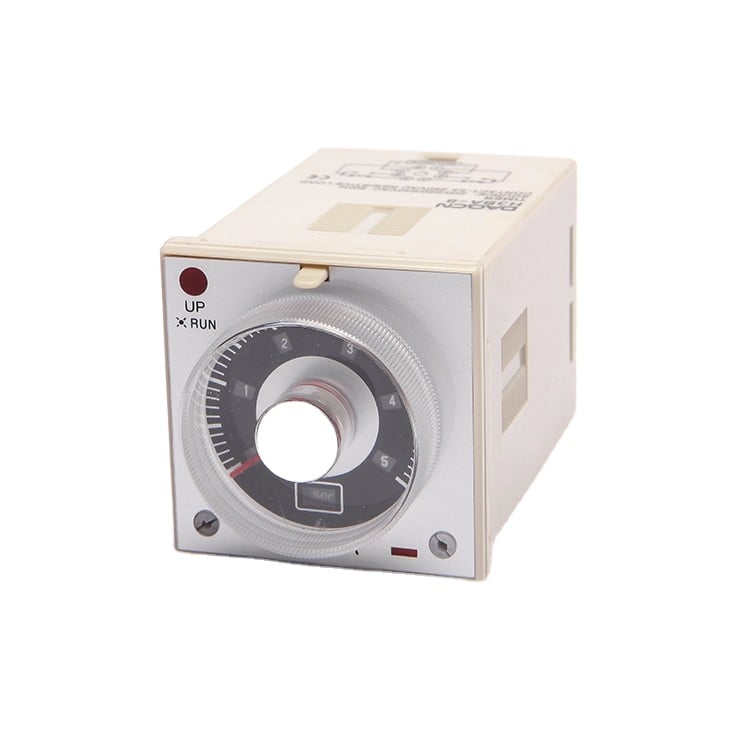
A 24-hour mechanical switch repeats the same pattern every day, because its dial turns once per day and the tabs trigger the same ON and OFF points on every rotation. The SUL181D, SUL181H, and DIN-rail SUL180A are built on this idea: a 16 A contact, minimum setting segments of roughly 15 minutes, and no battery. Timekeeping comes from a spring reserve or a synchronous motor that follows the mains frequency.
•Lowest cost per switched circuit and the simplest operator interface.
•No battery and no LCD to deplete, dim, or freeze; the SUL series is rated down to about -10 degrees C. Confirm the range on the datasheet.
•Settings are visible at a glance.
•Tabs are hard to move by accident and easy to audit.
Choose the mechanical family when the load runs the same hours every day and the schedule barely changes: shopfront and sign lighting, corridor lighting in a school, a plant-room fan that clears at fixed hours. The trade-offs are real: every day is identical, so weekday and weekend cannot differ, and a long outage stops a synchronous-motor unit until power returns. Spring-driven versions carry through shorter outages; the datasheet describes which drive your model uses.
3. The Digital Weekly Timer: Paying for Flexibility
Digital weekly timers answer exactly those two weaknesses. A weekly program lets Monday, Saturday, and Sunday hold different schedules. The DHC15A stores up to 32 ON/OFF events, uses a built-in battery rated at about three years to keep clock and program alive through outages, and switches a 16 A contact; the TM-619LHN is a companion weekly model. Programming takes minutes on the keypad, with resolution down to the minute and, on some models, to the second. Check the datasheet of the exact model.
•Weekday-specific programs match buildings that close on weekends.
•Multiple events per day suit pumps with several short runs.
•Battery backup keeps the clock right after an outage.
The price is complexity: a keypad with modes and a memory must be learned, and a never-replaced battery can lose the program after a long disconnection. The LCD also behaves less kindly in deep cold than a mechanical dial, so for an unheated enclosure in a harsh winter, weigh the operating temperature range on the datasheet.
4. Decision Drivers, One by One
•Accuracy and resolution: if the load must switch at the same minute each day and weekdays must differ from weekends, digital wins; if a 15-minute band is acceptable, mechanical saves money.
•Program complexity: one repeating daily pattern points to mechanical; weekday variation or several daily cycles points to digital.
•Outage behavior: a synchronous-motor unit loses its place when the mains drops; a digital unit with battery resumes on time; a spring-driven unit keeps running through short outages.
•Environment and life: mechanical units tolerate cold with no display to fail; digital electronics prefer reasonable temperatures. Check both ratings.
•Budget: mechanical is the lower first cost; digital avoids the energy waste of a schedule that cannot be trimmed.
Both families share the same installation care: a contact rating matched to the load, upstream overcurrent protection, and clean terminations. Neither forgives an undersized contact.
5. A Working Decision Matrix
•Fixed daily lighting, tight budget, no weekend difference: choose a mechanical unit such as the SUL181D or DIN-rail SUL180A.
•Weekday and weekend schedules differ: choose a digital weekly timer such as the DHC15A.
•A pump with short daily runs that must survive outages: the DHC15A or TM-619LHN covers it with 32 events and battery backup.
•Cold, unheated enclosure with a simple fixed schedule: mechanical wins; verify the low-temperature rating.
•Seasonal changes: digital pays off because reprogramming a keypad beats moving dial tabs.
Notice the pattern: the mechanical switch wins on simplicity, cold, and first cost; the digital weekly timer wins whenever the calendar is not flat. Distributors stock both deliberately, the SUL line for straightforward lighting and OEM panels and the digital models for buildings that need a real weekly program.
6. The Bottom Line for Specifiers and Buyers
Specify the load, then the schedule, then the environment, and the family usually chooses itself. If still close, pick the one your maintenance staff can operate without a phone call. DAQUAN builds both on the same DIN-rail footprint with 16 A class contacts and, as a manufacturer since 1996, supports OEM and ODM projects, so you can source either family with consistent quality and documentation. Ask for the datasheet of the exact model and verify contact rating, minimum segment or resolution, and operating temperature range before finalizing the bill of materials.
Discover DAQUAN’s CE/TUV-certified relays, timers, energy meters & WiFi smart switches for industrial automation. ISO9001 factory in Wenzhou, 30 km to airport, global OEM/ODM.
No. 172, Xinguang Avenue, Xinguang Industrial Zone, Liushi Town
Copyright © 2026 WENZHOU DAQUAN ELECTRIC CO.,LTD All rights reserved. Privacy Policy
 EN
EN
 Hot News