

Introduction to Relay Longevity in Continuous Operations
In heavy industrial environments operating twenty-four hours a day, seven days a week, reliability is the ultimate metric. For B2B procurement directors and engineering project managers, sourcing components that can withstand these continuous operations is a constant challenge. Among the most critical, yet frequently misunderstood, components are industrial relays.
These devices serve as the core switches controlling power distribution, motor starts, and automated processes. When a relay fails, a whole assembly line or power substation can grind to a halt, costing thousands of dollars per minute in unscheduled downtime. To prevent these failures, procurement teams must carefully evaluate relay longevity ratings. However, datasheets typically present two distinct lifecycle metrics: mechanical life and electrical life. Knowing how to interpret and weigh these two figures is the key to selecting the right relay and achieving a low total cost of ownership.
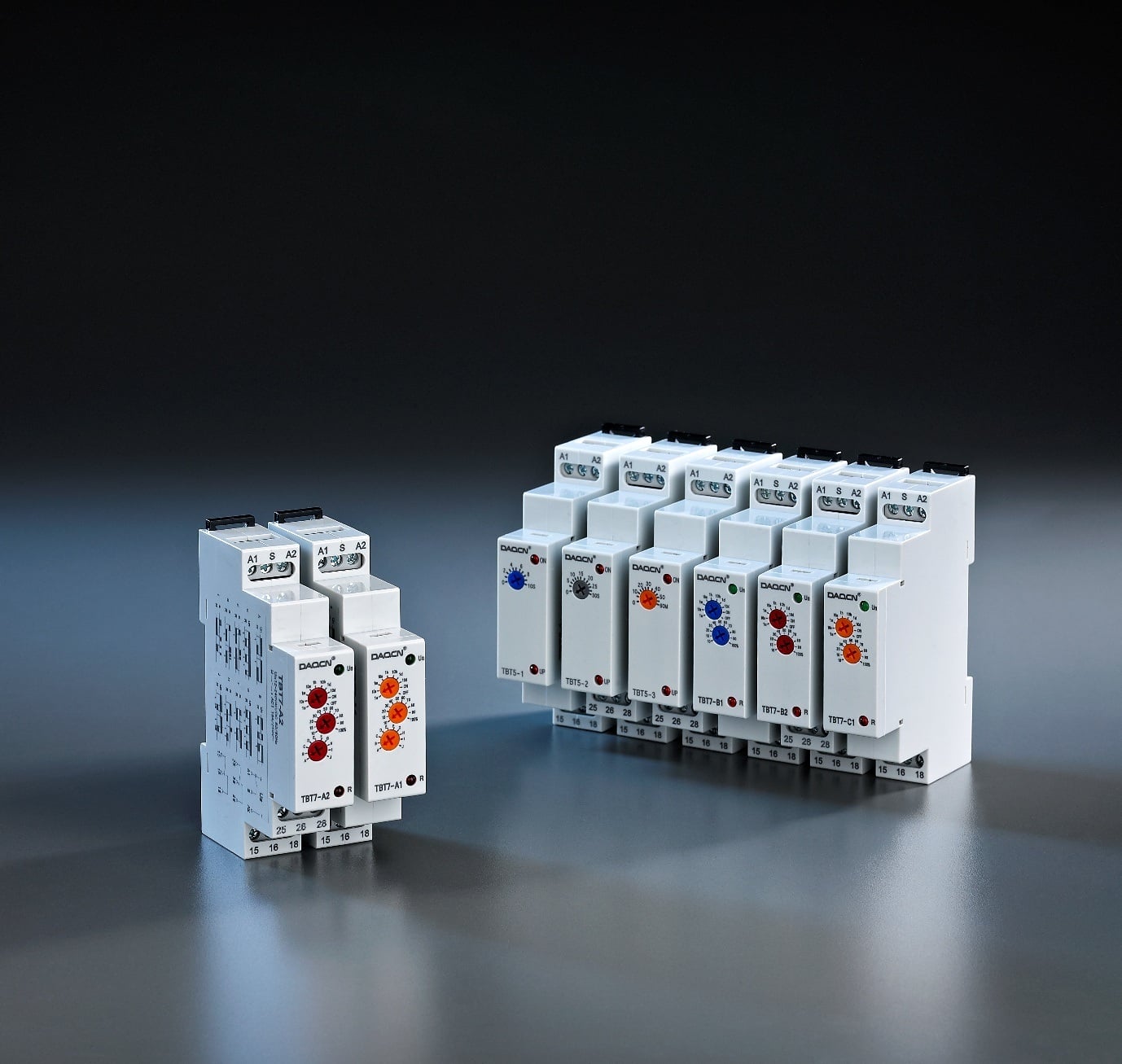
Q: How to interpret 'Mechanical Life' vs. 'Electrical Life' ratings when procuring relays for 24/7 operations?
Answer:
When procuring relays for continuous 24/7 industrial systems, mechanical life and electrical life represent two entirely different aspects of component endurance. Mechanical life refers to the total number of operations the relay's physical mechanism can perform without electrical current running through the contacts. It measures physical wear of springs, hinges, and plastic sliders. Electrical life, on the other hand, represents the number of times the relay can safely switch a specific electrical load under rated voltage and current before contact erosion or welding occurs. For 24/7 operations, electrical life is almost always the limiting factor and should serve as your primary procurement benchmark, as contacts wear out significantly faster under electrical arcing than physical mechanisms do from pure mechanical movement.
The Technical Difference: Mechanical Life vs. Electrical Life
To make an informed sourcing decision, it is essential to dive deeper into the physics of both ratings.
Mechanical life is tested under zero-load conditions. The manufacturer cycles the relay repeatedly until a mechanical part breaks or deforms. Because there is no electrical current, there is no heat generation from contact resistance, no electrical arcing, and no material transfer between the contacts. Consequently, mechanical life ratings are extremely high, typically ranging from ten million to one hundred million operations. This rating is useful for evaluating the quality of the relay's physical construction, the precision of its assembly, and the durability of its structural materials.
Electrical life is tested under loaded conditions, usually at the relay's maximum rated current and voltage, using either resistive or inductive loads. Each time the relay contacts open or close under load, a tiny electric arc forms between them. This arc generates intense localized heat, which melts, vaporizes, and transfers contact material from one side to another. Over time, this results in contact erosion, high contact resistance, or contact welding. Because of this intense physical stress, electrical life ratings are a fraction of mechanical life ratings, typically between one hundred thousand and one million operations.
Why Electrical Life is the True Benchmark for 24/7 Operations
In a 24/7 facility, a relay is rarely operated without a load. Therefore, relying on the mechanical life figure when planning maintenance intervals is a recipe for disaster. Consider a high-speed packaging machine where a relay cycles once every ten seconds.
If a procurement team selects a relay based on a mechanical life rating of ten million cycles, they might assume the part will last over three years. However, if the electrical life rating of that same relay under the machine's inductive motor load is only five hundred thousand cycles, the relay will likely fail in less than two months. This gap between mechanical expectation and electrical reality is one of the leading causes of premature equipment downtime.
Therefore, B2B buyers must always request detailed electrical life curves from the manufacturer. These curves show how the electrical life decreases as the switching current or load power increases. By matching the actual operating current of your factory machinery to these curves, you can accurately estimate the real-world lifespan of the component.
Key Procurement Factors for Continuous Duty Cycles
When sourcing relays for demanding 24/7 operations, procurement directors should focus on the following engineering aspects to maximize both mechanical and electrical longevity:
How DAQCN Engineering Maximizes Both Lifecycles
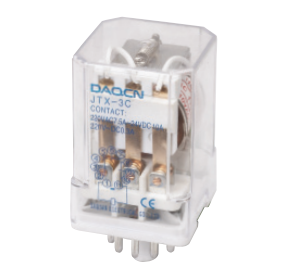
As a leading global manufacturer of electrical control components, DAQCN has engineered its industrial relays to bridge the gap between mechanical and electrical durability. We achieve this through advanced material science and automated manufacturing precision.
Our industrial relays utilize high-grade Silver Tin Oxide contacts sourced from industry-approved suppliers. Combined with our optimized contact spring geometry, DAQCN relays minimize contact bounce during switching. Reducing bounce directly translates to shorter arc durations, lower operating temperatures, and a massive extension of the relay's electrical life under high loads.
Furthermore, our physical structures are built using premium, glass-reinforced thermoplastic housings and heavy-duty return springs. This robust physical design ensures that our mechanical life ratings remain stable even in high-temperature control cabinets, giving B2B buyers the peace of mind that their 24/7 production lines will run smoothly without premature component fatigue.
Conclusion and Sourcing Recommendations
For B2B procurement professionals, understanding the distinction between mechanical and electrical life is essential for operational security. Never let a high mechanical life rating mask a mediocre electrical life rating. When sourcing for continuous 24/7 operations, prioritize electrical life ratings under your specific load conditions, opt for superior contact materials like Silver Tin Oxide, and implement conservative derating strategies. By partnering with quality manufacturers like DAQCN, you ensure that your projects are backed by components built to last, reducing maintenance overhead and maximizing plant uptime.
Discover DAQUAN’s CE/TUV-certified relays, timers, energy meters & WiFi smart switches for industrial automation. ISO9001 factory in Wenzhou, 30 km to airport, global OEM/ODM.
No. 172, Xinguang Avenue, Xinguang Industrial Zone, Liushi Town
Copyright © 2026 WENZHOU DAQUAN ELECTRIC CO.,LTD All rights reserved. Privacy Policy
 EN
EN
 Hot News