

Q: How to design a sequential start-up system using multiple time relays to reduce peak power surge?
Answer:
In heavy industrial facilities, starting multiple high-power machines or large motors simultaneously poses a severe electrical challenge. The combined inrush current from these inductive loads can reach five to ten times their steady-state operating current. This massive peak power surge often leads to voltage sags, nuisance tripping of main circuit breakers, stress on transformers, and increased electricity bills due to peak demand charges. To mitigate these issues, systems integrators implement a sequential start-up system. By utilizing multiple time relays, you can introduce precise time delays between the activation of each heavy load, ensuring that the cumulative inrush current never exceeds the safe threshold of the power distribution infrastructure. This technical guide covers the design principles, wiring strategies, component selection, and commissioning steps required to build a reliable sequential start-up system using DAQCN time relays.
The Electrical Challenge: Why Inrush Current Demands Sequence Control
When an electric motor is energized, it initially behaves as a low-resistance load. The magnetic field must be established, and inertia must be overcome to bring the motor up to speed. During this brief starting phase, which typically lasts from a few hundred milliseconds to several seconds, the inrush current is extremely high. If three 15 kW motors are started at the exact same moment, their combined peak surge can easily exceed 400 Amps, even if their total continuous running current is only 90 Amps.
Introducing a sequential start-up system ensures that Motor A starts first. Once Motor A has completed its startup cycle and its current has settled back to the steady-state level of 30 Amps, a time relay triggers Motor B. After Motor B is running stably, another time relay triggers Motor C. Consequently, the maximum current surge on the main line is limited to the inrush of a single motor plus the running current of the already operating machines. This reduces the peak load on your main transformers and keeps the system within safe limits, avoiding costly electrical upgrades.
Core Components of a Sequential Start-Up System
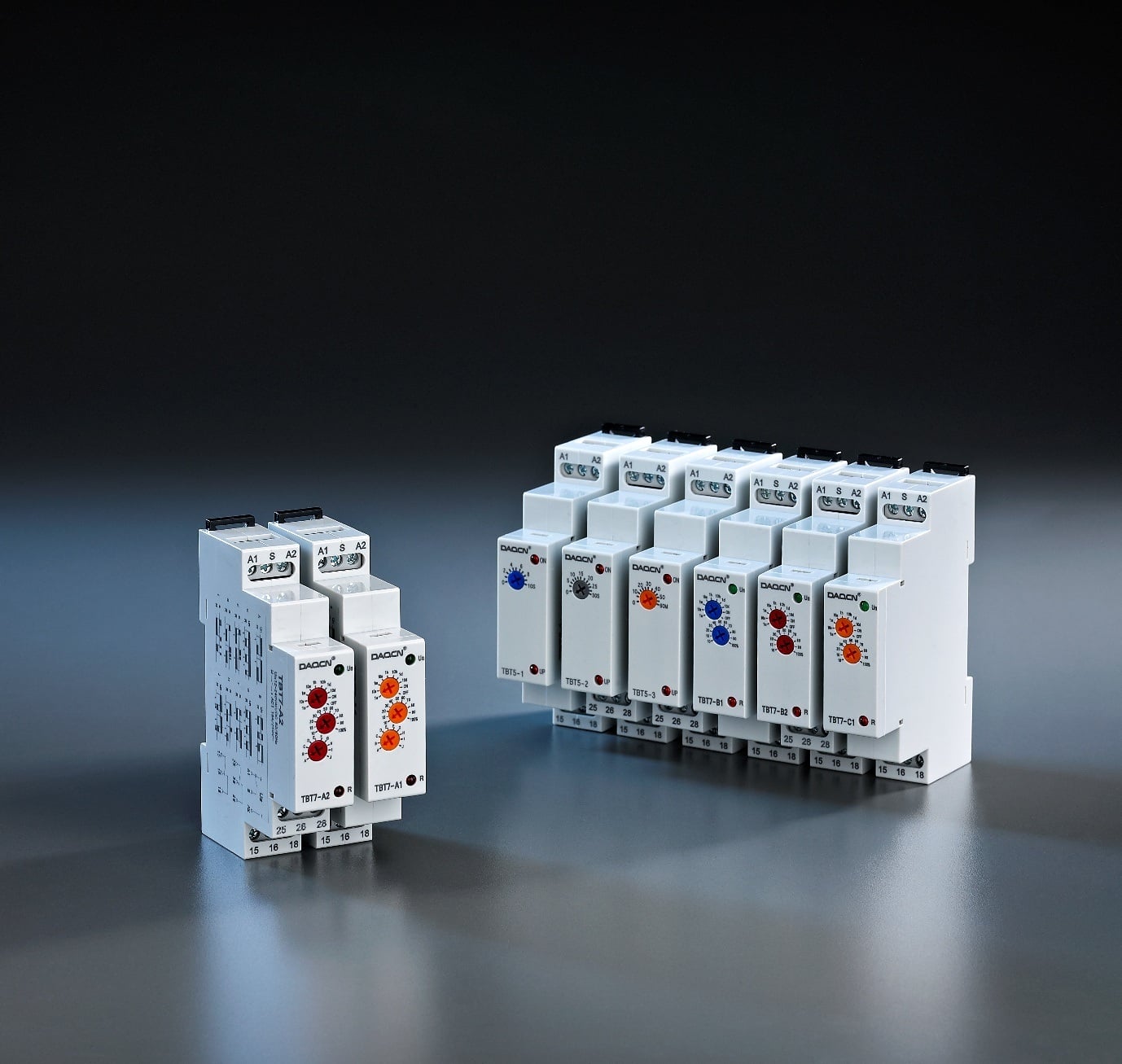
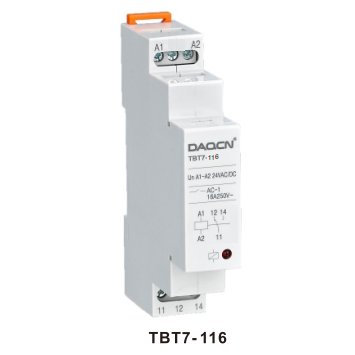
To build this system, you need highly reliable industrial control components. A failure in a single time relay can disrupt the entire sequence, potentially starting multiple high-loads simultaneously and tripping the system.
Detailed Wiring and Design Methodology
Designing the control circuit requires structured logic. The most common and robust approach is a cascaded delay-on-energization system. In this design, the activation of the first stage energizes the first time relay, which then begins its countdown. Once the set time expires, its output contacts close, energizing the second stage's contactor and starting the second time relay.
Let us break down a three-stage sequential start-up control schematic
step by step:
Step-by-Step Implementation Guide
Follow these practical steps to implement the system on the factory floor:
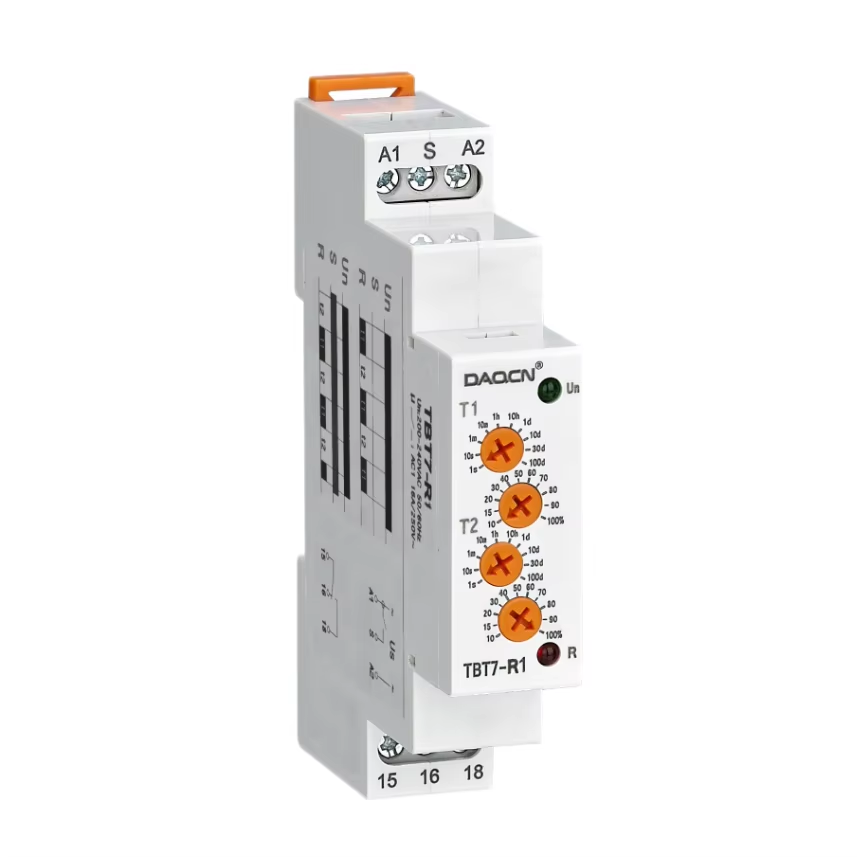
1. Mount Components: Install the DIN rails inside the electrical cabinet. Mount the DAQCN TBT7 time relays alongside the contactors and circuit breakers, ensuring sufficient clearance for thermal dissipation.
2. Wire the Control Circuit: Wire the stop and start pushbuttons in series. Run the start signal to the KM1 coil and parallel it to the KT1 time relay input terminals. Ensure you use standard color-coded wiring (e.g., blue for AC control) for easy troubleshooting.
3. Wire the Interlocks: For safety, wire the auxiliary contacts of the overload relays in series with the control line. If Motor 1 overloads and trips, its overload contact will break the control circuit, shutting down the entire sequence.
4. Adjust Time Settings: Turn the dials on the front panel of the DAQCN time relays to set the desired delay intervals. For initial testing, you can set longer delays (e.g., 10 seconds) to easily observe the sequential activation.
5. Commissioning: Disconnect motor power first to test control logic (dry run). Once verified, reconnect motor power and perform a hot run while monitoring line current with a clamp meter to ensure peak surge remains safe.
Selecting the Right DAQCN Time Relays for Procurement
When sourcing time relays for B2B industrial systems, procurement officers must pay close attention to several technical specifications:
Conclusion
Designing a sequential start-up system using multiple time relays is an essential strategy for managing power demand and protecting electrical infrastructure in modern factories. DAQCN high-precision, DIN rail-mounted time relays provide the reliability, flexibility, and longevity required by B2B systems integrators to build robust sequence control panels. By selecting the correct contact ratings, setting optimal delay times, and integrating reliable safety interlocks, you can ensure smooth factory operations and lower energy costs. For procurement and engineering inquiries, contact DAQCN today to find the perfect control solutions for your applications.
Discover DAQUAN’s CE/TUV-certified relays, timers, energy meters & WiFi smart switches for industrial automation. ISO9001 factory in Wenzhou, 30 km to airport, global OEM/ODM.
No. 172, Xinguang Avenue, Xinguang Industrial Zone, Liushi Town
Copyright © 2026 WENZHOU DAQUAN ELECTRIC CO.,LTD All rights reserved. Privacy Policy
 EN
EN
 Hot News